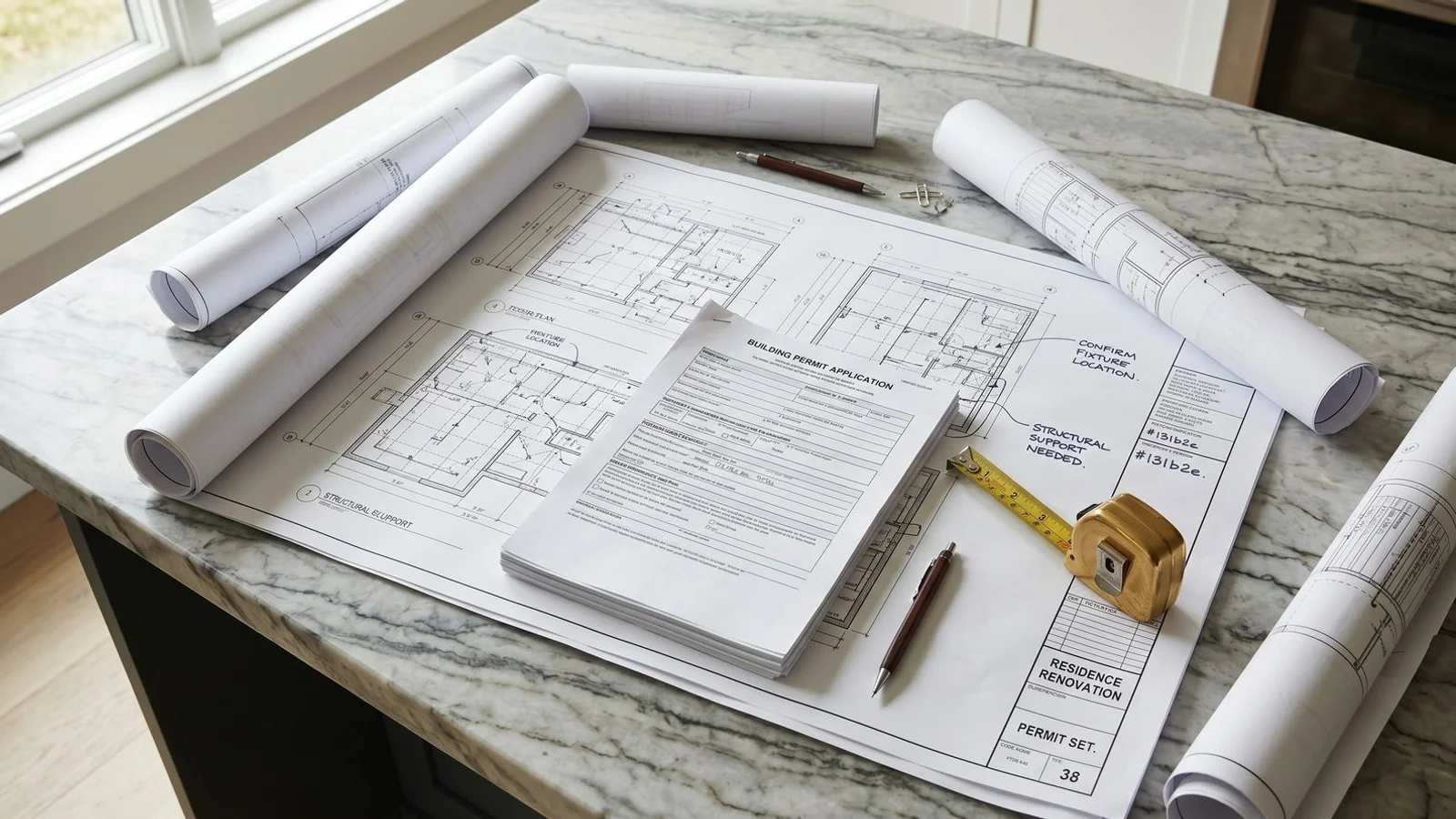
We know that city paperwork causes anxiety.
That initial confusion is often the biggest hurdle to starting a project.
The honest answer is that you probably do not need one.
Our guide breaks down the exact rules for kitchen renovation permits toronto.
It strictly depends on the scope of your update.
Let’s look at the municipal triggers and the true costs of skipping the process.
Do cosmetic renovations need a permit?
You do not need a permit for purely cosmetic kitchen updates in Toronto.
The city explicitly exempts like-for-like work where you leave the layout, structure, and building systems alone.
We always advise homeowners to verify their address on the Toronto Property Map first.
A quick search identifies heritage or conservation overlays that might mandate special approvals.
Specifically, you can execute all of the following tasks without a formal application:
- Replace cabinets in the exact same locations.
- Swap out countertops, backsplash tile, sinks, and faucets.
- Repaint walls, refinish floors, or install new light fixtures.
- Upgrade appliances, provided the plumbing, gas, and electrical connections stay put.
Our teams love starting these cosmetic projects because they bypass the review queue entirely.
You skip the application, avoid the inspections, and jump straight into construction.
The process could not be simpler.
Do I need a permit for kitchen renovation?
You must secure a permit when your project alters the structural integrity or major mechanical systems.
The Ontario Building Code requires official oversight for any layout changes that impact home safety.
We handle these specific applications regularly because modernizing an older home almost always hits a trigger.
Eligible interior projects under 100 square meters might even qualify for the city’s expedited FASTRACK review process.
The most common structural and mechanical triggers include:
- Structural changes: Removing or modifying a load-bearing wall, support beam, post, or floor joist.
- Plumbing relocation: Moving the sink, dishwasher, or icemaker supply lines to a new spot. (Like-for-like fixture replacement is exempt.)
- Electrical relocation: Adding heavy-duty circuits, shifting the main panel, or relocating appliance wiring.
- Gas line relocation: Moving a gas range or extending a new gas line.
- Ventilation changes: Installing a new range hood ducted directly to the building exterior where one did not exist.
- Window or exterior wall changes: Resizing or moving an exterior kitchen window.
Our contracts automatically include the filing process if your scope hits any of these marks.
Toronto Building review ensures everything meets safety standards before the drywall goes up.
This protects your family and your financial investment.
Average permit costs and fees
Budgeting for city fees is a common concern for homeowners.
The exact cost depends heavily on the complexity of your alterations.
We clearly itemize these municipal charges directly in your initial project estimate.
A standard plumbing permit runs around $300, but requiring an engineer will push that cost toward the higher end.
Keep in mind that securing the paperwork upfront is drastically cheaper than paying penalties later.
| Permit Type | Typical Fee Range (2026) | Common Trigger |
|---|---|---|
| Standard Building Permit | $300 to $1,500 | Moving plumbing fixtures |
| Structural Permit | $1,500 to $3,000+ | Removing load-bearing walls |
| Unpermitted Work Penalty | 50% of original fee | Caught without a permit |
How does the toronto building permit kitchen process work?
The typical process moves systematically from submitting technical drawings to closing out the final inspections.
The city relies on the Toronto Building online portal to manage all residential applications.
We act as your primary agent to keep the project moving smoothly through the municipal queue.
Standard scopes generally clear the initial review within two to six weeks.
Once we identify that your layout requires approval, the workflow follows these exact steps:
- Application filed: Uploading the site plan, floor plans, and sealed drawings from a BCIN designer or structural engineer.
- Initial review: City staff evaluates the submission against the 2024 Ontario Building Code updates.
- Permit issued: The city grants approval with specific construction conditions attached.
- Inspections during work: Municipal inspectors visit the site to approve the plumbing rough-in, electrical rough-in, and final completion.
- Permit closed: The city officially closes the file, adding the legal update to your property record.
Our project managers schedule all the inspector visits so you never have to wait around the house.
For projects in Mississauga, Markham, Vaughan, or Oakville, the local building departments follow a nearly identical sequence.
The timeline varies slightly depending on the specific municipality.
Why is unpermitted work a problem?
Skipping the required paperwork exposes you to severe financial and legal risks.
Many property owners in the GTA ask if they can simply bypass the city for a small structural edit.
We strongly advise against this shortcut because the downstream penalties are massive.
Toronto Building heavily penalizes undocumented construction.
The true cost of unpermitted work surfaces in several painful ways:
- Fines: Under the Ontario Building Code Act, first-time homeowner violations can trigger fines up to $50,000.
- Costly Retrofits: After-the-fact engineering drawings run between $2,000 and $10,000.
- Administrative Penalties: Toronto charges a strict penalty equal to 50 percent of the original permit fee just for the paperwork violation.
- Insurance Denials: If a fire or water leak traces back to unapproved wiring or plumbing, insurers routinely deny the claim.
- Resale Roadblocks: Buyers’ lawyers aggressively flag undocumented renovations and demand the seller legalize the space before closing.
- Stop-work orders: Inspectors have the authority to shut down your site immediately.
Our transparent approach prevents these expensive surprises from ruining your investment.
Pulling the right paperwork upfront is a minor cost compared to a legal nightmare.
The risks simply outweigh the temporary convenience.
When does condo work need board approval AND a permit?
Condo renovations usually require dual approvals to ensure shared building systems remain protected.
High-rise buildings across the GTA require a formal Section 98 Agreement under the Ontario Condominium Act before any demolition begins.
We cover this specific board approval process in detail in our condo kitchen renovation service.
The property management team must sign off on your materials, elevator usage, and plumbing shut-offs.
Handling both the city and the board requires precise timing to avoid delays.
Our administration team sequences both applications so neither bureaucratic process blocks the construction schedule.
You get a clear timeline from day one.
This keeps everyone aligned and stress-free.
What do we do for your kitchen renovation permits toronto?
Permit filing is completely included in every single renovation contract that requires one.
You do not have to spend hours on the phone with the city building department.
We prepare the application, pay the associated fees, schedule the rough-in inspections, and officially close the file.
Your only job is to select the finishes and enjoy the final result.
If you are not sure if your specific project needs a review, just ask.
Our estimators will review your ideas when you Get in touch for an in-home consultation.
You will receive a definitive, clear answer right on the spot.
Managing your kitchen renovation permits toronto properly is the foundation of a safe, successful project.
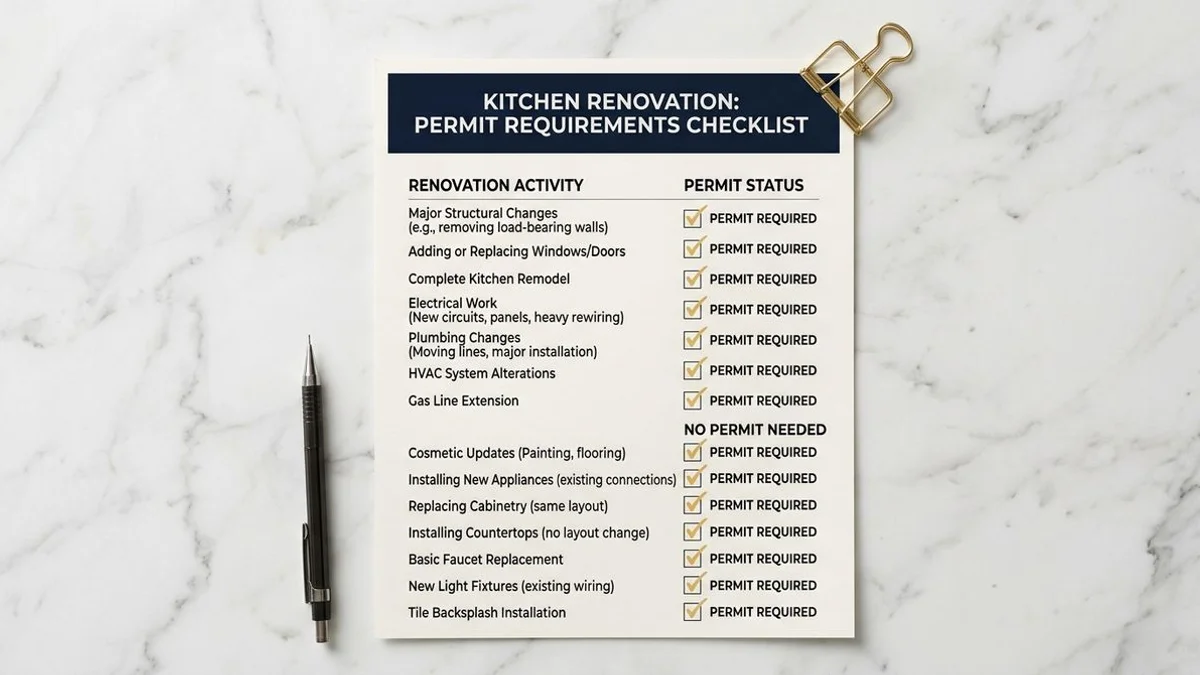
Permit-required vs no-permit renovation activity checklist