As professional cabinet makers here in the GTA, we see what happens to kitchens after a decade of heavy use. A well-built custom space should look great after 10 years and remain completely serviceable at 20. The difference between a kitchen that ages beautifully and one that degrades early comes down to basic cabinet maintenance.
We know that learning how to maintain kitchen cabinets can feel like a chore.
Most homeowners do not realize that simple habits protect an investment that averages $15,000 to $40,000 in Ontario today. Our team created this guide to show you exactly how to clean kitchen cabinets and handle minor adjustments. Let’s break down daily cleaning rules, finish-specific care, and the exact steps to keep your hardware functioning flawlessly.
Daily and weekly cleaning
For routine cleaning, the rule is simple: use a damp microfibre cloth, a drop of mild dish soap, and dry the surface immediately. You can keep most cabinet finishes looking pristine with this basic weekly habit.
We always recommend wiping up water spills the moment they happen. Hard water in the GTA leaves mineral deposits that slowly break down the topcoat. Water sitting on a cabinet door for hours is the leading cause of finish failure.
These are the top daily maintenance rules:
- Wipe spills immediately: Pay special attention to the sink area, dishwasher panels, and base units near the oven.
- Use the right soap: A damp microfibre cloth with a small amount of mild dish soap like Dawn or Mrs. Meyer’s works best for routine wiping.
- Avoid harsh sprays: All-purpose cleaners containing ammonia, bleach, or citrus solvents will dissolve most clear coats over time.
- Dry immediately: Do not let water sit on the surface or seep into door edges.
Cleaning by finish type
Painted cabinets (most common in Toronto)
Your painted cabinets require a gentle touch to prevent stripping the protective topcoat. The safest approach is a simple wash with a damp cloth and mild soap.
We see many homeowners ruin their factory paint jobs by scrubbing with abrasive sponges. You should never use a Magic Eraser on a painted door because it literally sands away the finish.
For stuck grease or heavy buildup, use a dedicated product like Rejuvenate Cabinet and Furniture Cleaner or Bona Cabinet Cleaner. These pH-balanced sprays target grime without harming the color layer.
Stained wood cabinets
Stained wood needs occasional conditioning alongside regular cleaning to prevent the grain from drying out. You can follow the same daily routine of a damp cloth and mild dish soap.
We recommend applying a high-quality furniture polish like Howard Feed-N-Wax every six months. This keeps the wood finish supple and resistant to cracking.
Silicone-based aerosol polishes are a common mistake. They create a hazy, sticky film that attracts dust and requires harsh chemicals to remove later.
Lacquer cabinets
Lacquer provides an exceptionally smooth, highly resistant finish that requires minimal maintenance. You only need a damp microfibre cloth to wipe away daily dust and fingerprints.
Our refinishing team strongly advises against any solvent-based cleaners like acetone or rubbing alcohol. Solvents will immediately melt and cloud a cured lacquer surface.
If you have a high-gloss lacquer kitchen, use a premium microfibre cloth with a tiny drop of mild soap. You must buff the surface completely dry to prevent water spots and streaking.
Thermofoil and melamine
Thermofoil and melamine surfaces are essentially plastic coatings applied over an MDF core. They are generally more forgiving during cleaning than painted wood.
We suggest using standard dish soap and water for almost any spill on these materials. The most critical rule is keeping water away from cracked or chipped edges.
Moisture that seeps into an exposed edge will swell the substrate underneath. This causes the plastic coating to bubble and peel away completely.
Hardware adjustment
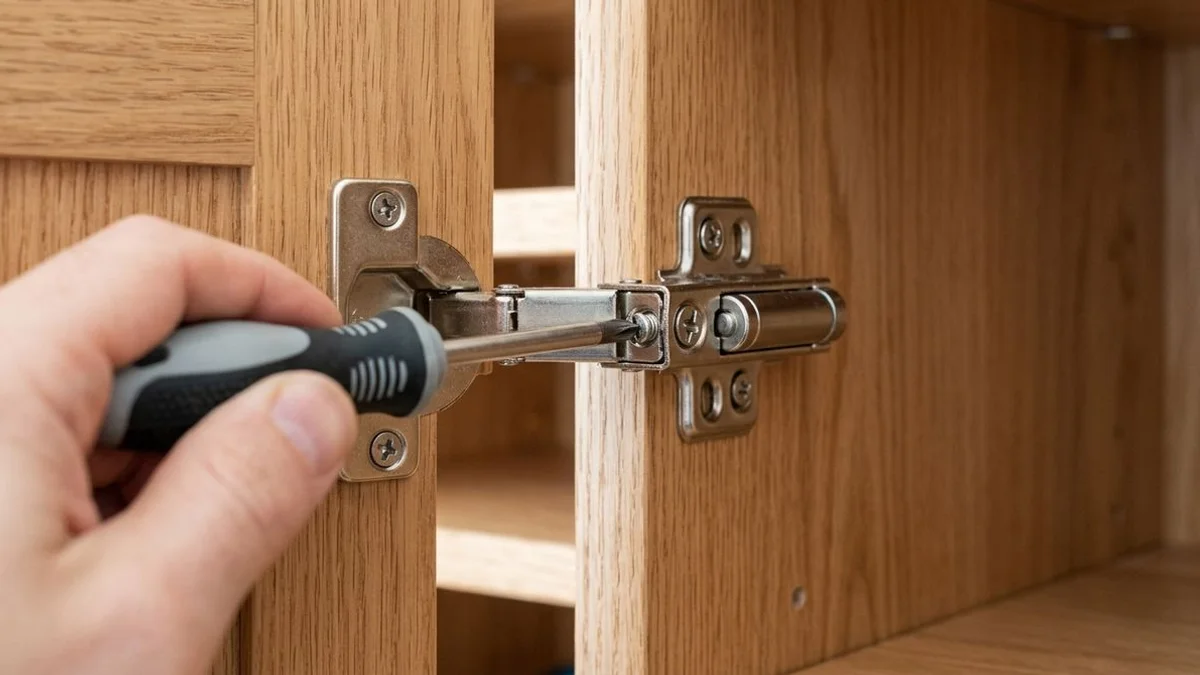
Soft-close hinges and drawer slides need occasional alignment to keep doors hanging straight. You can adjust most modern hinges using just a simple screwdriver.
Our installers use Blum COMPACT BLUMOTION hardware for almost every custom build. The cam adjustment screws on these hinges let you easily fix a door that is rubbing or an uneven reveal.
Here is how to align a standard cabinet door:
- Vertical adjustment: Locate the screw on the mounting plate closest to the cabinet wall to move the door up or down.
- Horizontal adjustment: Turn the front screw on the hinge plate clockwise to shift the door right, or counterclockwise to shift it left.
- Depth adjustment: Use the rear screw to move the door closer to or further from the cabinet box.
We tell clients to make quarter-turn adjustments only. Big swings can crack the wooden door frame if the hinge is already misaligned.
If the hinge feels loose at the wood screw, tighten it carefully by hand. You must never use an impact driver because it will instantly strip the wood.
Soft-close mechanism care
Blum and Hettich soft-close mechanisms rely on a tiny hydraulic damper to control the door speed. You can easily clean or replace these small parts without buying an entire new hinge.
We notice that soft-close actions start feeling weak or completely fail after five to ten years of heavy use. Some Blum hinge models actually feature a small switch on the hinge arm that turns the soft-close feature on and off.
If a door suddenly starts slamming, check that the switch was not accidentally flipped to the “off” position. If the setting is correct, try these two troubleshooting steps:
- Clear dust and debris: Remove grime from the hinge cup by blowing it out with a can of compressed air.
- Check for damper saturation: A blown hydraulic cylinder will leak slightly. You can buy individual replacement dampers for $10 to $20 per hinge.
Drawer slide maintenance
Premium drawer slides like Blumotion are zero-maintenance systems under normal kitchen conditions. The best way to maintain them is simply avoiding excessive weight and hard impacts.
We install slides rated for up to 100 pounds in a typical kitchen drawer. Exceeding this limit with heavy cast iron pans or stacked plates will permanently warp the steel track.
Several common habits will significantly shorten the life of your hardware. These are the main causes of slide failure:
- Overloading the box: Never exceed the 100-pound weight rating on standard kitchen drawers.
- Ignoring spilled liquids: Sticky spills that seep down into the slide track will gum up the ball bearings. Always wipe down the sides promptly.
- Aggressive slamming: The soft-close cylinder catches normal momentum just fine. Repeated hard slams will shatter the plastic catch mechanism.
Refinishing schedule
Cabinet finishes wear at different rates depending on your household traffic and the specific coating type. You should plan for minor touch-ups after five years and a full top-coat refresh after a decade.
We highly recommend professional cabinet refinishing over total replacement because it provides exceptional long-term value. A professionally applied coating extends the life of MDF or wood base materials by another 8 to 15 years. Different materials require drastically different long-term care plans.
| Finish Type | Typical Kitchen Traffic | Recommended Refinishing Schedule |
|---|---|---|
| Painted Finish | Heavy family use | Touch-ups at 5 to 7 years. Full repaint at 12 to 15 years. |
| Stained Wood | Normal daily use | Clear top-coat refresh at 12 to 15 years. |
| Sprayed Lacquer | Normal daily use | 20+ years with careful, gentle cleaning. |
Our shop refinishes the units we build and often restores cabinets built by other companies. The decision to refinish always depends on the structural quality of the existing cabinet boxes.
What voids your warranty
Our standard 10-year cabinet craftsmanship warranty protects you against manufacturing defects and normal hardware failure. You will void this coverage through structural modifications, unchecked water damage, or using abrasive chemicals.
We stand behind our joinery and installations when they are used as intended. The guarantee automatically covers peeled primer, lifted wood veneer, and drawer slide failures under normal loads.
Certain situations fall completely outside the scope of manufacturing liability. The following issues are not covered under a craftsmanship warranty:
- Sustained water damage: Swelling caused by undetected sink plumbing leaks, faulty dishwashers, or broken ice-maker lines.
- Abrasive cleaning: Scrubbing that physically strips the clear coat or paint layer.
- Unauthorized modifications: Re-drilling hinge locations, cutting away structural supports, or removing fixed shelves.
- Physical impact damage: Dents and deep gouges caused by moving heavy appliances or subsequent renovation work.
Routine wear from daily cooking is fully expected and covered. Please reach out to our customer service desk if you are unsure whether a specific issue qualifies for a repair claim.
When to call us
You should contact a professional when cabinet alignment fails completely or finish damage exposes the bare wood underneath. Most minor adjustments are quick warranty visits that cost you nothing out of pocket.
We want your kitchen to function exactly as it did on installation day. If a soft-close hinge snaps or a drawer track buckles, do not try to bend the metal back into place yourself.
Watch for these specific warning signs that require a service call:
- Significant finish wear, peeling paint, or lifting laminate edges.
- Door alignment that constantly drifts out of place after you adjust the screws.
- Drawer slides that grind, stick, or fail completely under normal weight limits.
- Any hardware issue that makes the cabinet unsafe or difficult to open.
Our service team handles most hardware fixes quickly and at no cost under your active warranty. Please Contact us to schedule a repair visit, or browse our custom cabinet service page for full renovation work on existing GTA kitchens.
Hand adjusting a Blum soft-close hinge with a screwdriver