You already know that exploring kitchen cabinet styles toronto homeowners love sets the tone for your entire renovation project.
Our professional service team sees this decision paralyze property owners every single week.
The sheer volume of options turns an exciting upgrade into a stressful guessing game. You want a look that feels current but won’t look dated when you decide to sell in ten years. This balance is exactly why understanding the underlying design rules is so critical.
A style that fights your home’s natural architecture will always feel a bit off.
We will break down the four core styles ruling the CA market right now. This guide covers the specific design cues for each, where they work best, and exactly how to choose the right fit for your property.
The four core styles
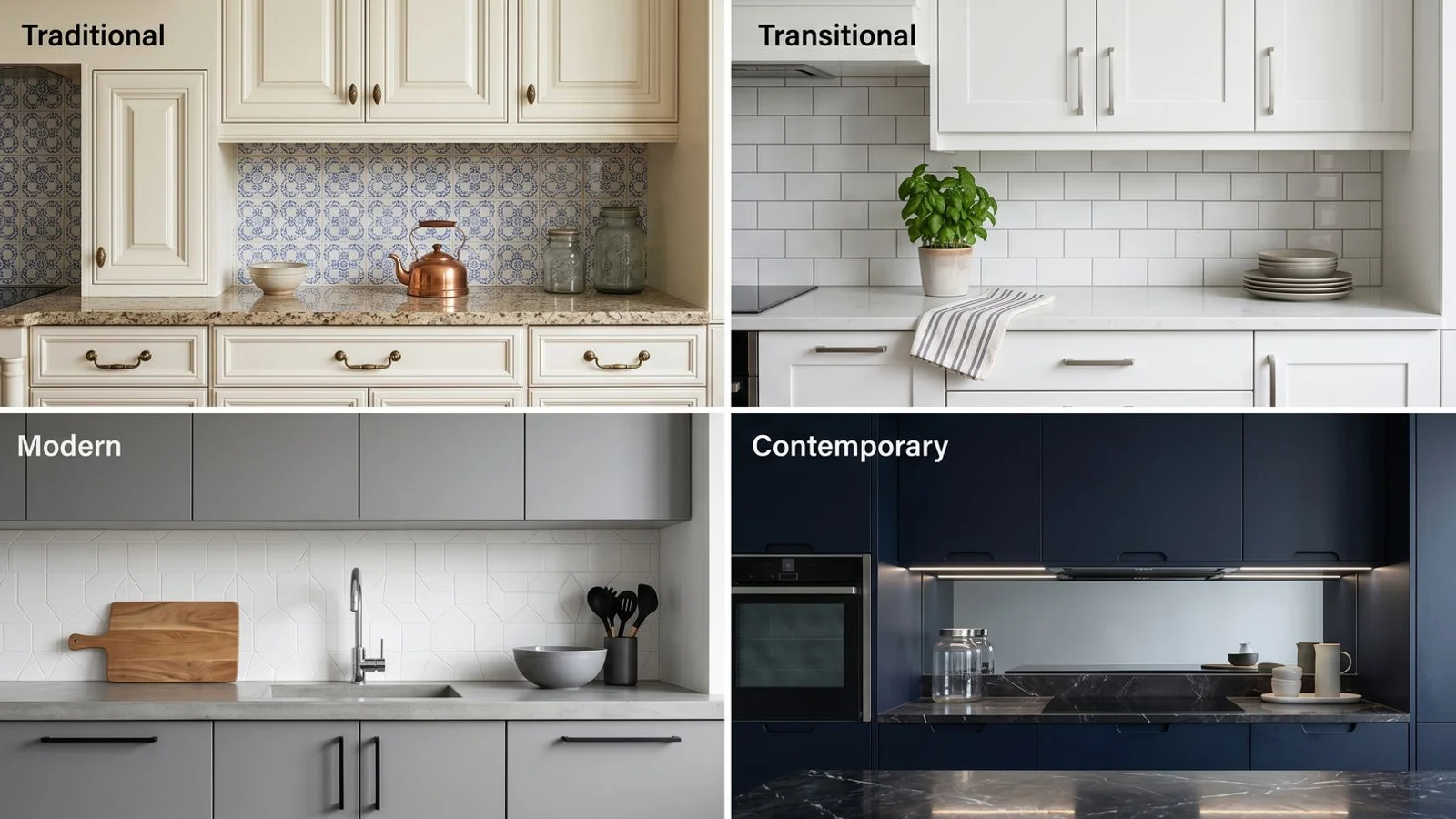
The market essentially revolves around four core cabinet styles toronto designers recommend. Each design offers clear visual cues and an architectural sweet spot that maximizes your home’s value.
We work with these distinct kitchen cabinet styles toronto residents request daily across the GTA. The right choice depends entirely on your specific property type.
According to a 2026 Houzz design study, minor updates focusing on the right cabinet match yield an average 113% return on investment in CA. This data proves that selecting the correct foundation pays off immediately.
Let’s examine the specifics of each category.
Traditional: raised panel, ornate, painted or stained
Traditional cabinets feature raised-panel doors, decorative moulding, and warm finishes. This rich style brings an immediate sense of history and craftsmanship to a room.
We source specific materials to make these classic designs pop. Here are the defining characteristics of this approach:
- Visual cues: Raised-panel doors, intricate crown moulding, and warm, inviting tones.
- Door styles: Raised panel, recessed panel with applied beadboard, and complex mitered frames.
- Hardware: Unlacquered brass cup pulls, antique-bronze knobs, and ornate handles from premium brands like Emtek.
- Finish: Creamy paints like Benjamin Moore’s White Dove (OC-17) or rich stains. A 2026 trend report highlights deep espresso browns, like Silhouette AF 655, making a massive comeback for grounding traditional spaces.
- Toronto fit: Victorian semis in the Annex or Riverdale, Tudor revivals in The Kingsway, and heritage homes in Old Oakville.
- Avoid in: Newer condos, modern infill builds, and contemporary subdivisions where the ornate details clash with minimal architecture.
Transitional: shaker, the safe-but-elegant default
Transitional kitchen cabinets blend traditional warmth with clean modern lines. This safe but elegant default relies heavily on the classic shaker door profile.
Our installation crews put the transitional kitchen cabinets toronto property owners request into more homes than any other option. Here is what defines the transitional look:
- Visual cues: Shaker-style flat-panel doors with a clean reveal frame. The look reads clean but never feels sterile.
- Door styles: Standard Shaker (5-piece flat panel), the increasingly popular slim shaker (featuring narrow half-inch stiles), and simple recessed panels.
- Hardware: Brushed brass or brushed nickel pulls, simple knobs, and occasionally integrated hardware for a sleeker finish.
- Finish: Light wood stains are taking over. In fact, a 2026 industry survey noted that natural white oak just surpassed painted white cabinets in popularity for the first time in a decade, capturing 29% of the market.
- Toronto fit: Almost everywhere. This style suits Don Mills mid-century homes, Bayview Village luxury properties, Markham new builds, and downtown condos.
- Why it’s popular: Transitional shaker reads timeless and holds serious resale value. Real estate data shows a minor kitchen remodel focused on transitional upgrades recovers 113% of its cost upon resale.
Modern: slab, clean, lacquer
Modern cabinets utilize flat-panel slab doors with minimal or completely hidden hardware. This style strips away all decorative excess to focus purely on geometry and material finish.
We highly recommend looking into advanced laminates for these spaces. The defining traits include:
- Visual cues: Flat-panel slab doors, high-gloss or matte lacquer finishes, and an absence of ornate details.
- Door styles: Slab (flat panel), high-quality thermofoil, melamine, and advanced laminates.
- Hardware: Integrated J-pulls, push-to-open mechanisms, or very slim brushed-nickel edge pulls.
- Finish: Matte finishes are currently dominating the condo market. We highly recommend Fenix NTM, a premium Italian nanotechnology laminate. This specific material costs around $230 to $350 per sheet but offers incredible thermal-healing properties and resists fingerprints completely.
- Toronto fit: Newer condos in the Vaughan Metropolitan Centre, Liberty Village lofts, and contemporary infill builds.
- Avoid in: Heritage homes. The sharp contrast usually reads jarring rather than fresh or deliberate.
Contemporary: handleless, ceiling-height, integrated
Contemporary design pushes modernism further by hiding appliances and extending cabinetry fully to the ceiling. Handleless channels and mixed luxury materials define this ultra-premium look.
Our design team uses this approach to create flush, furniture-like installations. A fully contemporary setup typically runs 30% to 50% above transitional pricing due to the intense labor required.
- Visual cues: Handleless cabinets, ceiling-height runs, panel-ready integrated fridges, and mixed materials like matte lacquer paired with raw stone.
- Door styles: Handleless slab, integrated J-channel, framed glass, and mixed-material panels.
- Hardware: Premium push-to-open systems like Blum Tip-On, J-channel pulls, or absolutely no visible hardware.
- Finish: Multi-step lacquer, real wood veneer like premium walnut, and flush stone slab integration.
- Toronto fit: Premium custom new builds, Lorne Park executive homes, Old Oakville lakefront properties, and high-end Yonge-Bloor condos.
- Avoid in: Tight budgets. Creating precise handleless reveals requires absolute precision and expensive specialized hardware.
How to pick
Choosing the right design requires balancing your property’s architecture with your personal timeline and budget. These three specific filters will narrow down your options immediately.
1. Your home’s architecture. A Victorian semi always reads best with traditional or transitional elements. A 1990s subdivision works beautifully in transitional or modern.
Downtown condos naturally fit modern or contemporary layouts. You must avoid fighting the original architecture.
2. Your time horizon and budget. If you plan to stay in the home for more than five years, lean toward transitional design. It ages the best out of all the options.
If you are flipping a property in the next 18 months, transitional or modern refacing is your smartest play. A minor remodel using transitional refacing costs around $28,458 on average but returns roughly $32,141 at resale.
| Cabinet Style | Best For Timeline | Average Cost Profile | Resale ROI Potential |
|---|---|---|---|
| Transitional | 5+ Years or Quick Flip | Moderate ($28k average remodel) | Highest (up to 113%) |
| Modern | 2-5 Years | Moderate to High | Strong in Urban Areas |
| Traditional | Forever Homes | High (Requires wood/details) | Moderate (Niche appeal) |
| Contemporary | Forever Homes | Premium (+30% to 50%) | Moderate (Luxury market only) |
3. Your aesthetic temperament. Some homeowners need warmth, which they find in traditional spaces or transitional designs with stained wood accents. Others need calm minimalism, pointing them toward modern or contemporary setups.
We advise clients to identify their visual default early. Knowing your preference helps you avoid the common trap of picking a style that photographs well but fails to suit how you actually want to feel while cooking.
Door styles within each category
The specific profile of your cabinet doors dictates the general category of your kitchen. Understanding these basic shapes helps you communicate exactly what you want to your builder.
- Shaker: This is a flat-panel door with five-piece frame construction. It remains the most common door style across Toronto.
- Slim Shaker: A newer variation featuring very narrow stiles, usually around half an inch thick. This option provides a slightly more modern take on the classic look.
- Slab: A single flat panel with absolutely no frame. This clean profile always reads modern or contemporary.
- Raised panel: The center panel sits raised above the outer frame, often featuring a bevelled edge. This heavy detailing reads strictly traditional.
- Recessed panel: The center panel sits below the frame, sometimes decorated with applied moulding. It reads transitional or traditional depending on the specific trim detail.
- Beadboard: Vertical grooved planks fill the center panel. This texture reads cottage or coastal traditional.
Hardware pairings
The hardware finish you select matters just as much as the actual door style. Choosing the correct metal and shape pulls the entire design together.
Our preferred hardware brands, like Richelieu and Emtek, offer hundreds of variations. However, a few proven combinations always work well.
- Traditional + brass cup pulls: A classic Victorian or heritage property match. Unlacquered brass is particularly trendy for 2026 because it develops a natural patina over time.
- Transitional + brushed brass: The current default choice for most CA renovations.
- Transitional + matte black: A high-contrast option that adds a sophisticated edge to white oak cabinets.
- Transitional + brushed nickel: A slightly cooler, more architectural look.
- Modern + integrated J-pull: Creates a sleek, handleless reading.
- Contemporary + push-to-open: Delivers a completely flush surface with no visible hardware whatsoever.
Avoiding the “kitchen confusion” trap
Mixing too many different cabinet styles creates visual chaos and actively hurts your home’s resale value. The most common mistake we rescue homeowners from is blending multiple themes without a clear, unifying plan.
A traditional perimeter paired with a modern island can work if you have a massive open-plan space. A modern perimeter with a transitional pantry wall functions well as a deliberate architectural accent.
Mixing three or more styles, or randomly swapping styles between adjacent runs of cabinetry, ruins the flow completely. You need to pick a primary lane.
“When in doubt, pick one primary style and commit fully. You should use finish variations like painting versus staining, or hardware changes like mixing brass with matte black, to create interest within that single style.”
Change orders represent another trap to avoid. Toronto contractors note that changing your mind on cabinet styles mid-project typically adds 15% to 20% to your total budget.
We strongly suggest finalizing your vision before ordering a single box. This discipline keeps your project on time and under budget.
See styles in the wild
Viewing the best kitchen cabinet styles toronto has to offer in your own space makes the final decision much easier. You need to see how the materials react to your specific natural light.
Browse our custom kitchen cabinets service for the exact styles we fabricate locally, or book a free in-home consultation to get started on your project.
We will bring physical door samples directly to you. This allows you to handle the materials and see the finishes in your home’s actual lighting conditions before making an investment. Contact our team today to find the perfect fit for your property.
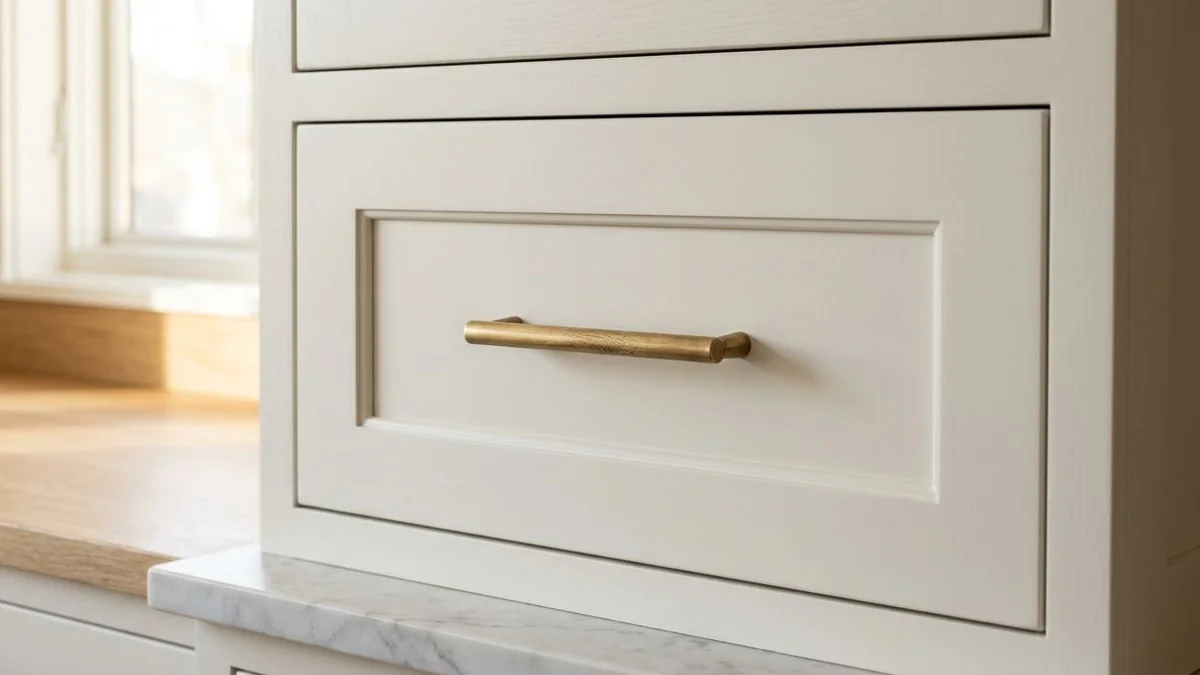
Shaker-style cabinet door with brushed brass pull